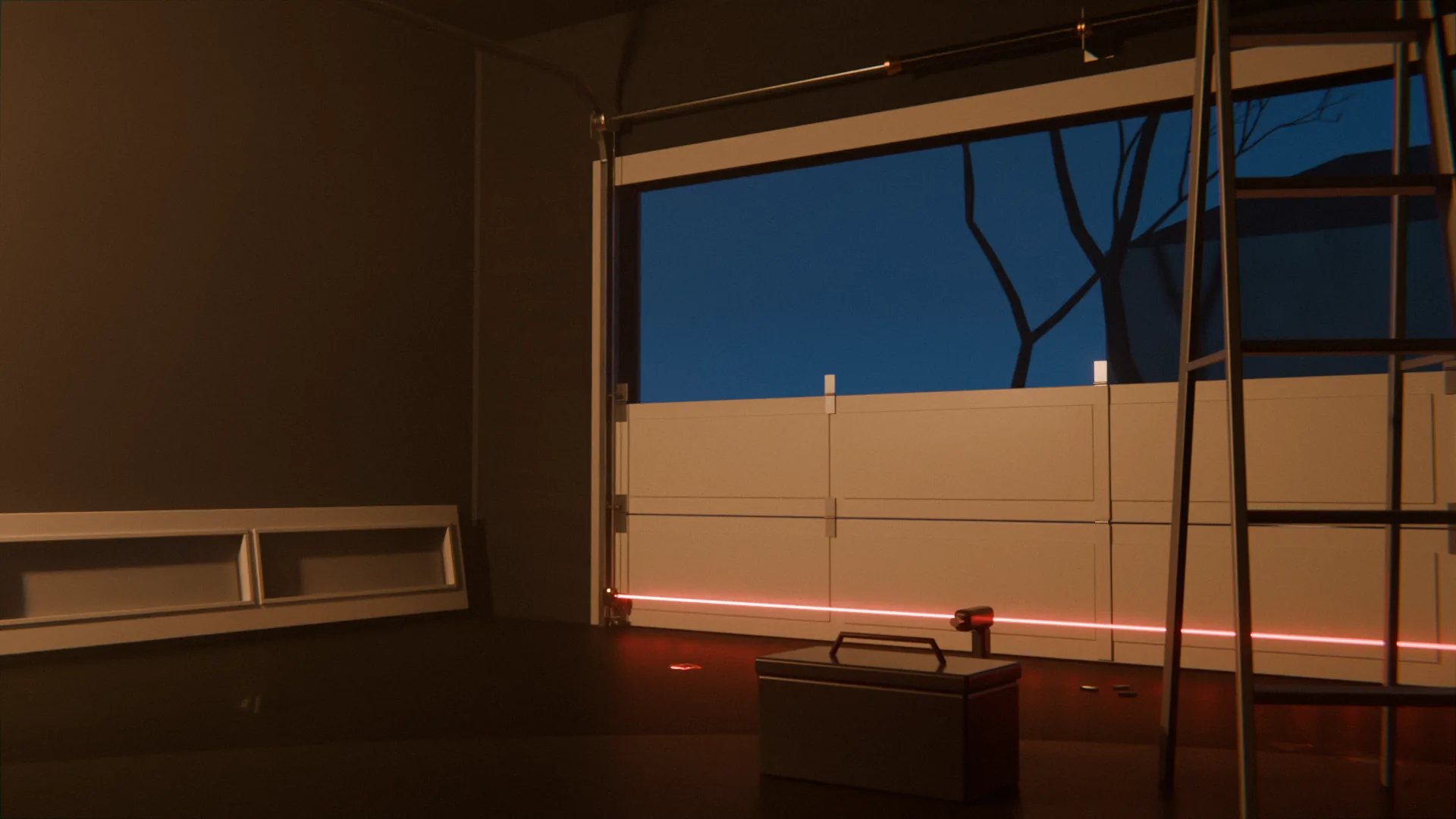
Garage door installation in North Jersey and Central Jersey
New residential and commercial doors installed, the old door hauled away, tracks set to level and the opener programmed to the new door.
What this covers
A new door is one of the few garage door jobs where everything is new at once: sections, tracks, springs, rollers and hardware, sized to each other from the first fastener. Doors are fitted in steel, aluminum, wood composite and glass, insulated where the garage is part of the heated house, for homes and for commercial openings. The old door is removed and taken away, the tracks are set plumb and level, the springs are sized to the weight of the new door rather than inherited from the old one, and the visit ends with the safety reversal test. Bookings are taken by appointment at any hour across Bergen, Essex, Hudson, Middlesex, Morris, Passaic, Somerset and Union counties.
- Steel doors in raised panel, flush and carriage styles
- Aluminum and glass section doors for a full view opening
- Wood composite doors and insulated, energy rated doors
- Commercial doors for shops, service bays and small warehouses
- Removal and haul away of the old door and hardware
- New tracks, springs and opener programming for the new door
What an installation covers, layer by layer
A door is installed from the opening outward, and each layer is only as good as the one under it.
The last layer is the one that is tested out loud, with the homeowner watching the door reverse on the block before the technician packs up.
- 01 · The opening Headroom, side room and depth measured, jambs checked plumb and solid A frame out of plumb forces the tracks out of square, and a door hung on soft framing works its lag screws loose within a season
- 02 · Tracks and hardware Vertical and horizontal tracks set level, hinges and rollers assembled section by section Tracks set by eye rather than by level bind the rollers at the curve and wear the door into a shudder within months
- 03 · Sections and springs Sections stacked and sealed, springs sized to the measured weight of the new door and wound to balance Springs inherited from the old door are sized to the old door, and the new door runs heavy at the floor or floats at the top
- 04 · Opener and safety test Travel and force limits programmed, photo eyes aligned, the reversal test run on a block of wood An opener still set for the old door crushes the new bottom seal or reverses on it, and an untested reversal is a safety device nobody has confirmed
What people want to know before booking
Choosing the material
Steel doors are the working default: they take a knock, they clean with a hose and they are available insulated or not. Aluminum with glass sections suits an opening you want to see through and a facade you want lighter, and wood composite gives the timber look without the annual painting. The right choice matches the house, the exposure and how much noise the door is allowed to make.
Insulation, and when it matters
An insulated door earns its cost where the garage is attached to the house, finished as a room, or heated, because the door is the largest opening in that envelope. Insulation also quiets the door and stiffens the sections, which matters on wide openings. For a standalone garage used for storage and the car, an uninsulated door does the same job for less.
What happens to the old door
The old door comes down, is taken apart and leaves with the technician, along with the old tracks, springs and hardware, and the opening is checked and prepared before anything new goes up. Reusing old tracks under a new door is the shortcut that causes the most callbacks, because tracks and rollers are matched to the sections that run in them.
How long the installation takes
A standard single or double residential door is a same day job, with the removal of the old door taking the first part of the visit and the new door, springs and opener programming taking the rest. Commercial openings and doors with unusual headroom or framed openings take longer and are scheduled accordingly. The estimate states the expected time on the day of the work.
Choosing a door material
Steel carries the majority of residential doors for plain reasons: it is strong, it is affordable across a wide range, and it takes insulation cleanly between its skins. Within steel, the choices are the panel style, the gauge of the skins and the thickness of the insulation, and the differences show up in dent resistance and in how the door sounds in the rain.
Aluminum and glass doors are the choice where the garage is part of the view, such as a facade facing the street or a converted space that needs daylight. They are lighter, which is easier on springs and openers, and they are framed rather than solid, which matters if a ball is aimed at them.
Wood composite doors give the look of timber with less of the maintenance, and they are chosen where the door is a visible part of the house's face. True wood exists and is handsome and needs painting on a schedule. The material decision is mostly about what the door faces and who maintains it, and the estimate can lay the options out with their prices side by side.
What insulation does for the door
An insulated door has a core between its skins, measured by R value, and the difference it makes depends on what is behind it. A garage attached to a kitchen or finished as a living space sits on the other side of that door, and the door is the largest movable part of that wall. Insulation slows the exchange of heat and quiets the street noise coming through.
There is a second effect that has nothing to do with temperature: insulation stiffens the sections. A wide double door flexes as it travels, and an insulated section keeps its shape better, which is kinder to hinges and rollers over the years. The stiffening matters as much as the warmth on wide openings.
For a detached garage holding cars and shelving, an uninsulated door is a reasonable choice and it is priced accordingly. The trade is stated plainly rather than sold: insulation is worth its cost when the space behind the door is one you heat, cool or live beside.
The installation day, from removal to test
The old door comes down first, section by section, with the springs unloaded before anything else is loosened. Tracks, cables and hardware come out with it, and the opening is inspected while it is bare, because the frame is the one part of the job that cannot be replaced with the door.
The new build goes up in the reverse order: tracks set and plumbed, then sections stacked from the bottom with rollers and hinges set as they go, then the spring system sized to the door's measured weight and wound to balance. The opener is reconnected to a door it has never met, which means its travel and force limits are programmed from the start rather than trusted.
The last steps are the ones that make the door yours: photo eyes aligned, remote and keypad and smartphone paired, and the reversal test run on a block of wood. The door is run through several full cycles, the balance is checked by hand at half travel, and the site is cleared of the old door and the packaging.
Springs sized to the new door
A new door weighs what it weighs, and it is usually not the weight of the door it replaced. Insulation, steel gauge and window sections all move the number, and the springs are sized to the measured weight of the new door rather than matched to whatever hung there before.
Sized correctly, the door balances at half travel and moves easily by hand, which is the state the opener expects. Sized wrong, the opener works outside its design on every cycle, the bottom seal either hovers or drags, and the door develops the heavy at the bottom, light at the top character of a balance problem.
The spring specification is written down for the next visit, along with the door's weight and the turn count. A door installed with a record of its own springs is a door whose next service starts from a known point instead of a measurement taken under pressure.
The safety reversal test and the handover
A closing door meets a block of wood laid flat on the floor and must reverse on contact. That is the test the opener's force system is held to, and it is run at the end of every installation with the results visible rather than described. The photo eyes are tested the same way, with the beam broken mid close.
The handover covers the things you will use: the manual release cord and when to pull it, the battery backup and how it behaves in an outage, and the app if the opener carries smartphone control. Emergency release and manual operation are demonstrated with the door parked rather than explained in the abstract.
What you are left with is a door that balances by hand, reverses on contact and has springs recorded to its own weight. Maintenance from there is a light lubrication a couple of times a year and an annual look at the parts that wear, all of which is on the safety inspection page if you want it checked professionally.
Frequently asked questions
Question 1: How much does a new garage door cost?
No price is published, because doors are priced by size, material, insulation and hardware, and two doors on the same street can differ several fold. A written estimate comes before work begins, and it can price two or three door options side by side so the trade between them is visible. Removal of the old door is part of the quoted work rather than a line added at the end.
Question 2: How long does an installation take?
A standard residential door, single or double, is fitted in a day: the old door comes out in the first part of the visit and the new door, springs and opener setup fill the rest. Openings with unusual headroom, custom sizes or commercial hardware take longer and are scheduled for it. The estimate states the expected day and the visit confirms the hours.
Question 3: Can I keep my old tracks and springs?
The tracks are replaced with the door as standard, because tracks, rollers and sections are matched to each other, and a new door on old tracks inherits the wear that took the old door out. The springs are sized to the new door's measured weight, and the old springs were sized to a different door. Both decisions are in the estimate rather than buried in the fine print.
Question 4: Is an insulated door worth it?
It is worth its cost where the garage is attached to the house, finished, or heated, because the door is the largest opening in that wall, and insulation also stiffens the sections and quiets the door. For a detached garage used for storage, an uninsulated door does the same job for less. Say what the space behind the door is used for and the estimate can price both.
Question 5: Do you install commercial doors?
Commercial and light industrial doors are installed for shops, service bays and small warehouses, in steel and aluminum sections sized to the opening. The same visit logic applies: the opening is measured, the door and spring system are matched to the traffic it will see, and the safety reversal test is run before handover. Send the opening size and the use, and the estimate follows.
Question 6: Do you serve my town?
Installation is offered across Bergen, Essex, Hudson, Middlesex, Morris, Passaic, Somerset and Union counties at homes and at commercial properties. The work is done at your property, the old door leaves with the visit and nothing is dropped off for disposal. Appointments are taken at any hour, and the installation day is chosen around your schedule.
Question 7: Do I need a new opener with a new door?
Not necessarily. A sound opener is reprogrammed to the new door, with travel and force limits set from scratch and the reversal test run before it is signed off. An opener that was struggling under the old door is worth replacing at the same time, because the door is already apart and the wiring is already in reach, and the estimate prices that option rather than assuming it.
Where we do this
We cover eight counties across North Jersey. All services are performed at your home or business.
- Bergen County70towns
- Essex County23towns
- Hudson County12towns
- Middlesex County25towns
- Morris County39towns
- Passaic County16towns
- Somerset County22towns
- Union County21towns
Towns we cover
- Hackensack, NJ
- Paramus, NJ
- Fort Lee, NJ
- Newark, NJ
- Montclair, NJ
- Livingston, NJ
- Jersey City, NJ
- Hoboken, NJ
- Bayonne, NJ
- Edison, NJ
- Woodbridge, NJ
- New Brunswick, NJ
- Morristown, NJ
- Parsippany-Troy Hills, NJ
- Madison, NJ
- Paterson, NJ
- Clifton, NJ
- Wayne, NJ
- Bridgewater, NJ
- Basking Ridge, NJ
- Somerville, NJ
- Elizabeth, NJ
- Summit, NJ
- Cranford, NJ