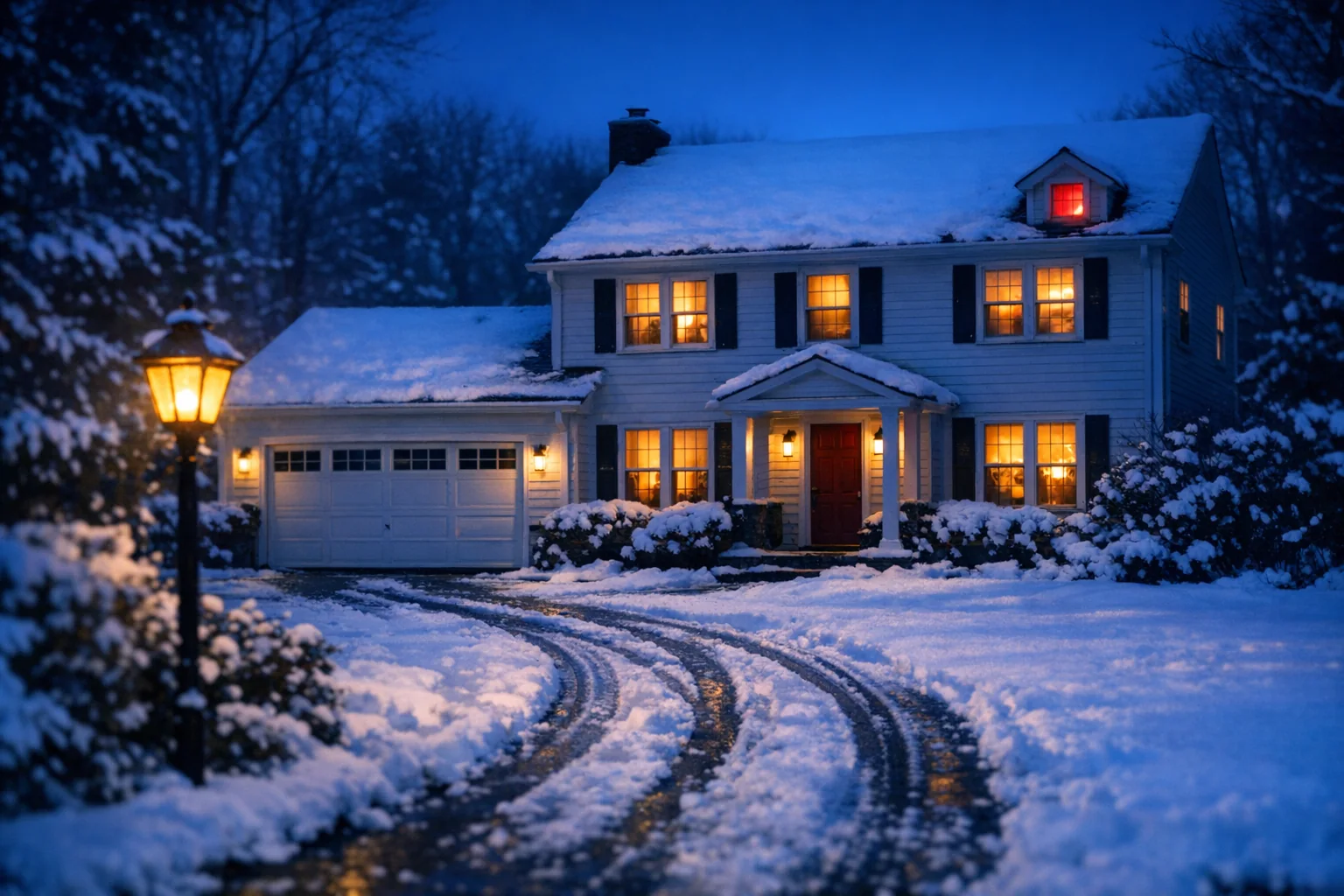
Garage doors fail on a schedule nobody chooses, and the schedule favors the worst week of the year. Cold thickens lubricant, ice welds the bottom seal to the slab, and a spring that has been running short of its cycle rating all year lets go on the first morning the metal contracts hard. The fix is not heroics in December. It is an hour in October.
This checklist splits cleanly into two lists: what a homeowner can check and do, and what belongs to a technician. The dividing line is stored energy. Anything spring loaded is on the far side of it.
What you can check and do
- Run the door by hand, with the opener disconnected. Pull the emergency release with the door closed, lift it to about waist height and let go gently. A balanced door stays put; a door that sinks or shoots up is telling you the springs have drifted.
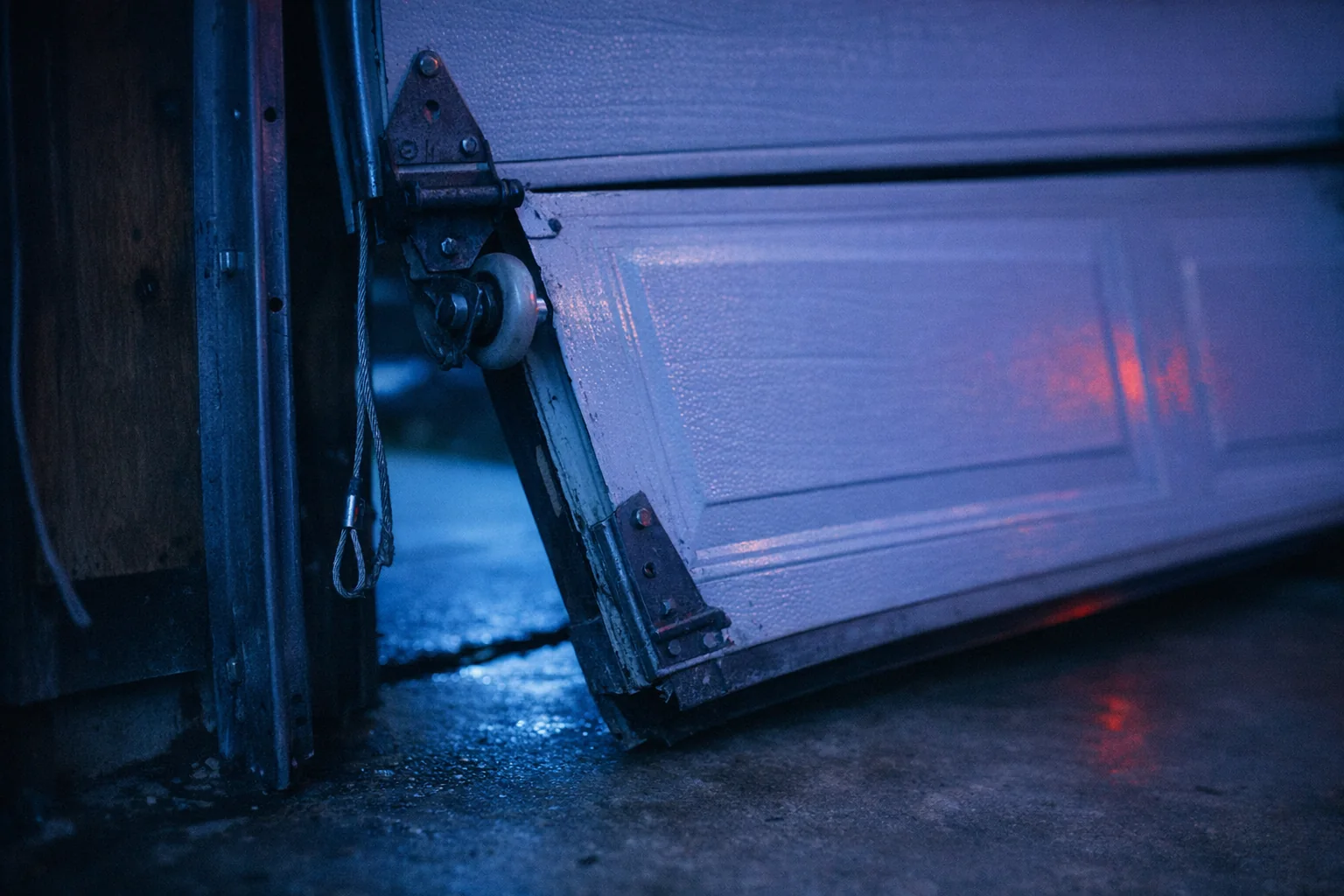
- Watch a full cycle from inside. The door should rise and lower evenly, without shaking, catching or leaning to one side. A crooked lift is a cable or track problem starting.
- Look at the bottom seal. Press it with a thumb: it should be rubbery, not cracked and brittle. Clear leaves, grit and salt buildup out of the track ends so the seal can seat properly.
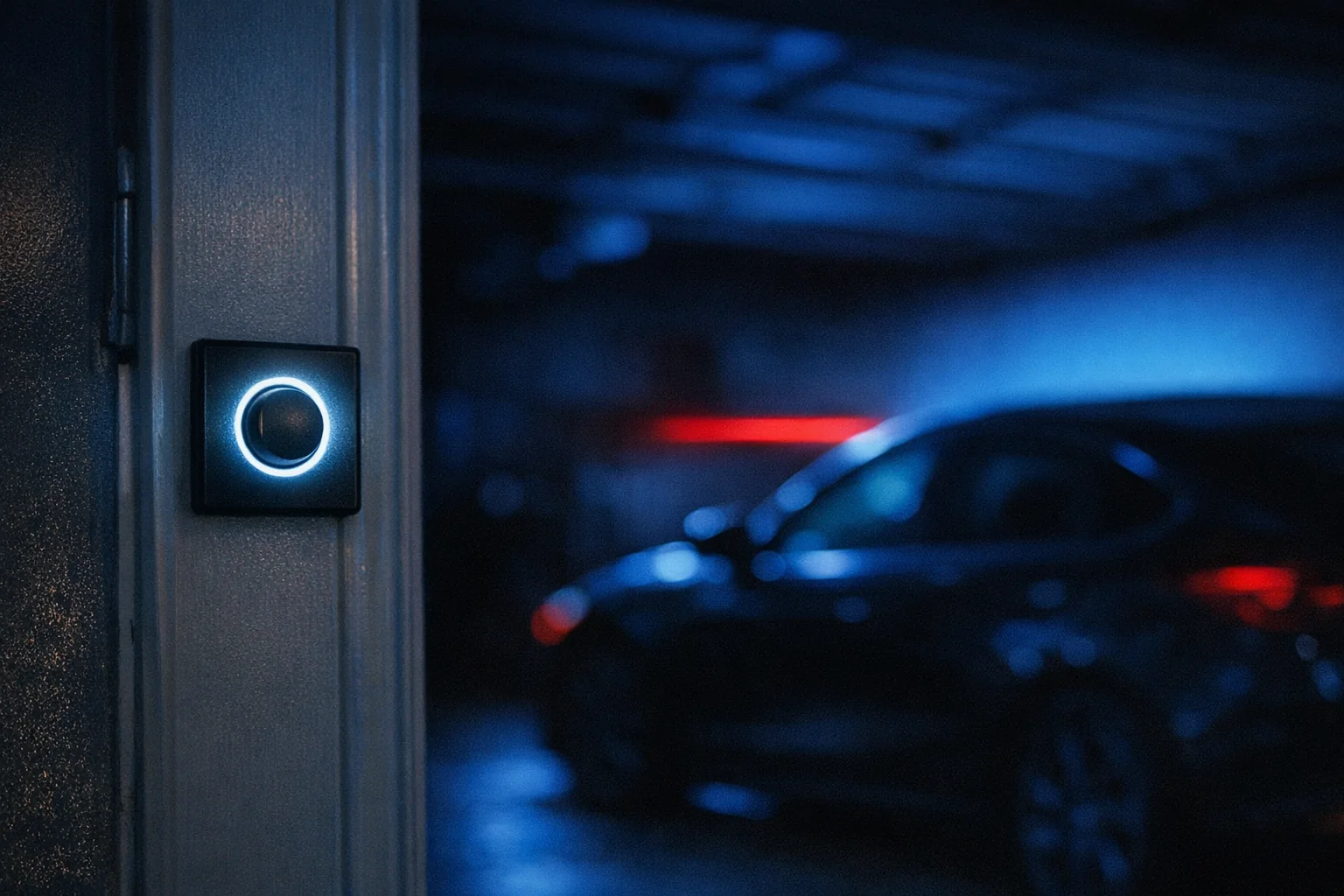
- Clean the photo eyes with a dry cloth. A dusty lens is the cheapest cause of a door that will not close, and it is worse after a summer of mowing dust.
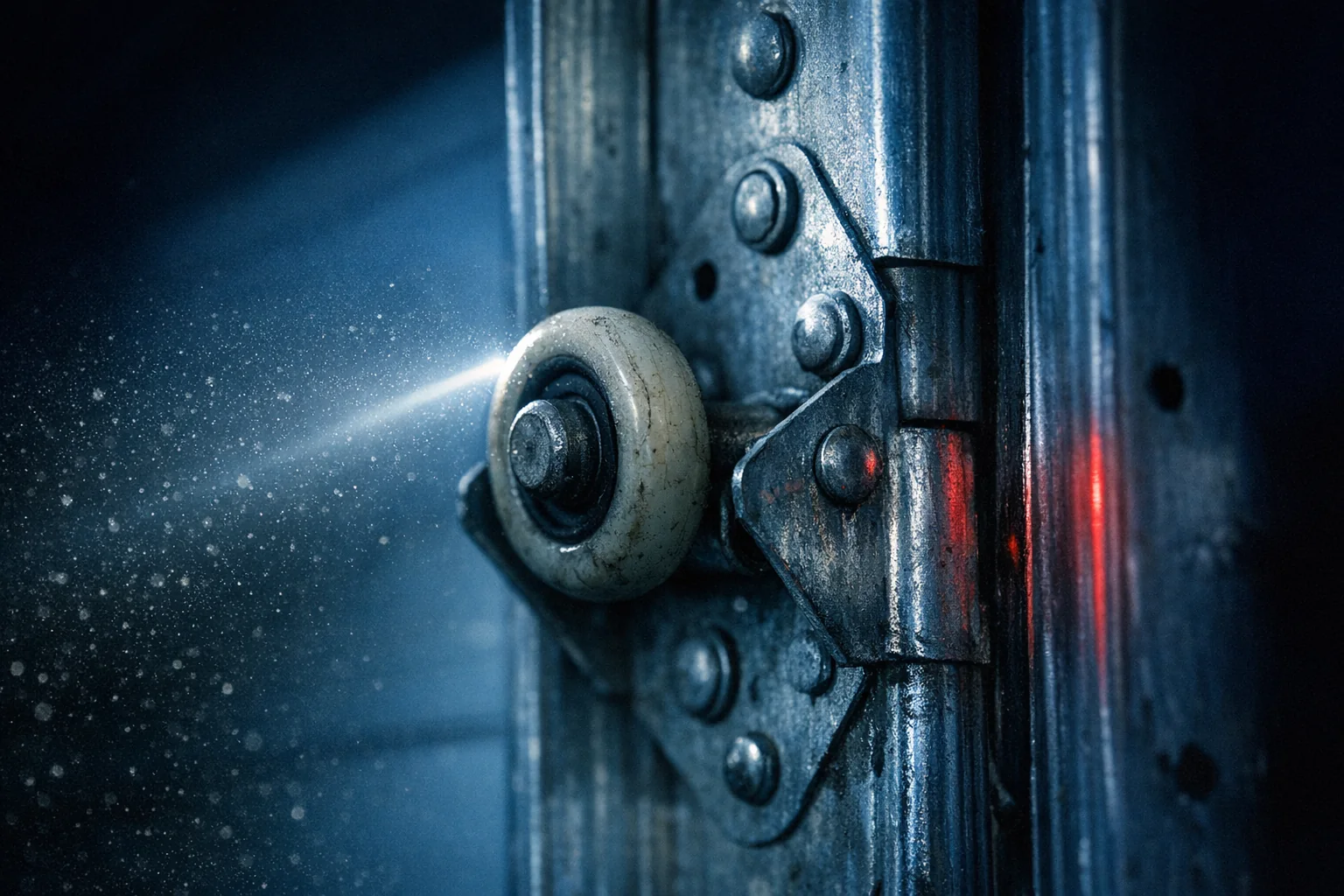
- Lubricate the right parts with the right product: a light oil or silicone product on roller bearings, hinges and the opener rail. Nothing on the tracks, and nothing on the torsion springs themselves.
- Check the battery backup if the opener has one. Most units have a test or a status light; the manual names it. Replace a battery that shows weak before the storm that would have needed it.
- Test the auto reverse twice: once by breaking the photo beam while the door closes, and once with a roll of paper towels laid flat under the door. The door should reverse both times, promptly.
What belongs to a technician
Anything on the spring shaft, on the cable drums, or inside the opener's force settings. Winding a torsion spring is counted turns under full torque with winding bars, and releasing one wrong is the most dangerous ordinary mistake on a house. Cable replacement means securing the door and resetting the drums evenly. Force limits decide how hard the opener pushes before it reverses, and setting them is a test procedure, not a dial.
A professional fall service covers those parts and the rest of the door in one visit: spring tension measured, cables inspected for fray and fray points, rollers checked for flat spots and cracked nylon, tracks checked plumb and level and cleaned, hinge and bracket screws snugged, the opener's force and travel limits read and set, the sensors aligned, the emergency release worked, and the auto reverse proven. On our own visits that is the 12 point inspection, and the findings come back in writing.
Why winter is the season that finds everything
Water is the mechanism. Melt and rain run to the bottom of the opening, sit in the seal and the track ends, and freeze overnight. A door sealed into an ice line strains its opener, chews its bottom seal and lifts crooked until the ice gives. Salt carried in on tires and boots finds the same steel, and a coastal or road salted garage accelerates rust on every bare hinge and roller.
Cold also finds the marginal parts. A spring at the end of its cycle rating has less reserve in freezing metal. A battery that would have limped through a summer outage fails in the first cold snap. A nylon roller that was getting brittle cracks on a hard morning. None of these is caused by winter; winter is the exam they had been failing all year.
- The door is hard to lift by hand, or the opener sounds more labored than last year.
- The door moves unevenly, or the cables look different from each other.
- Grinding or scraping on the rise, which is metal on metal in the tracks.
- The bottom seal is cracked, torn or has gone hard.
- The backup battery reports weak, or has never been checked since installation.
Any one of those is worth a call before the first hard freeze. None of them gets cheaper in January, and a door that fails on a school morning in a sleet storm is the worst version of a job that would have been an easy afternoon visit in October.
When to call us
Book a safety inspection in the fall and the winter list mostly writes itself out of it: the seal and track work happens on the visit, the battery is checked, and whatever the springs and cables are about to do is said plainly, in writing, before the cold. All work is performed at your home or business across Bergen, Essex, Hudson, Middlesex, Morris, Passaic, Somerset and Union counties.
Frequently asked questions
Question 1: How often should a garage door be serviced?
Once a year for most homes, and fall is the useful season for it in New Jersey. A door that cycles many times a day earns a check twice a year.
Question 2: Can I lubricate my garage door myself?
Yes, with a light oil or silicone product on the roller bearings, hinges and opener rail. Keep it off the tracks, which only need to be clean, and off the torsion springs, which the factory ships dry on purpose.
Question 3: My door is frozen shut. What should I do?
Do not run the opener against it, because a motor straining against an ice bound seal strips gears. Break the ice at the bottom seal with warm water, then try the door by hand, and call if it still will not move.
Question 4: What is included in a 12 point safety inspection?
Spring tension, cable condition, roller wear, track alignment, opener force limits, photo eye alignment, the auto reverse test, the emergency release, hinge and bracket fastening, weather seal, the balance of the door by hand, and the hardware generally, with the findings in writing.
Question 5: Should I disconnect the opener for winter?
No. The emergency release exists for power cuts and for the balance test, not for daily use. Run the door normally, and use the release only when you need to.
Question 6: Does cold weather break garage door springs?
Cold does not break a healthy spring, but it finds one at the end of its cycle rating. Metal contracts in the cold and the last reserve goes, which is why springs pick the coldest morning to let go.