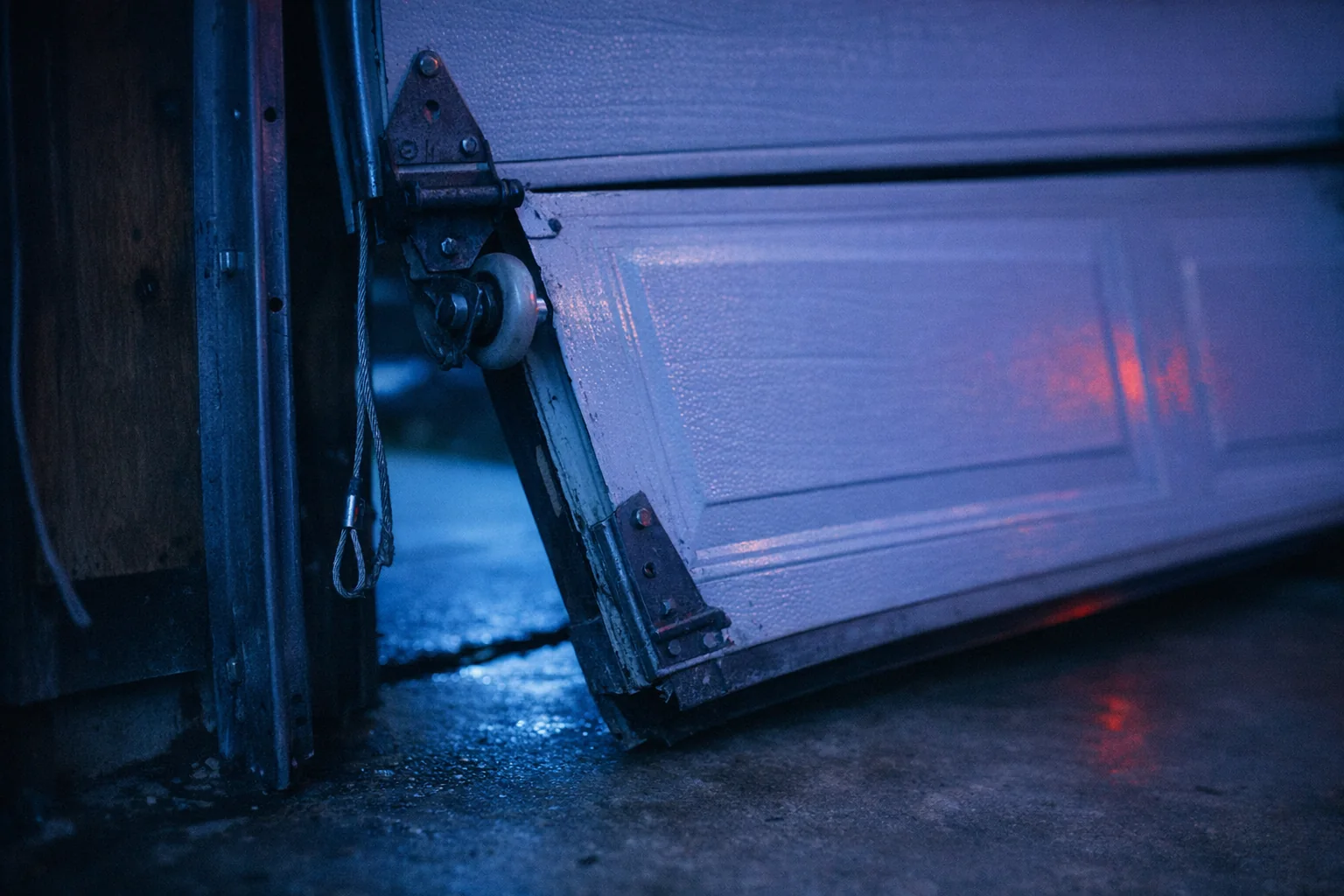
When a garage door leaves its track, one side hangs, the panel looks bent out of square, and the instinct is to fix it the way you would fix anything else: push it back where it belongs. That instinct is the expensive part of this article. A door off its track is a system under load that has lost its guides, and the weight it is holding is not the weight it looks like.
Why doors come off track
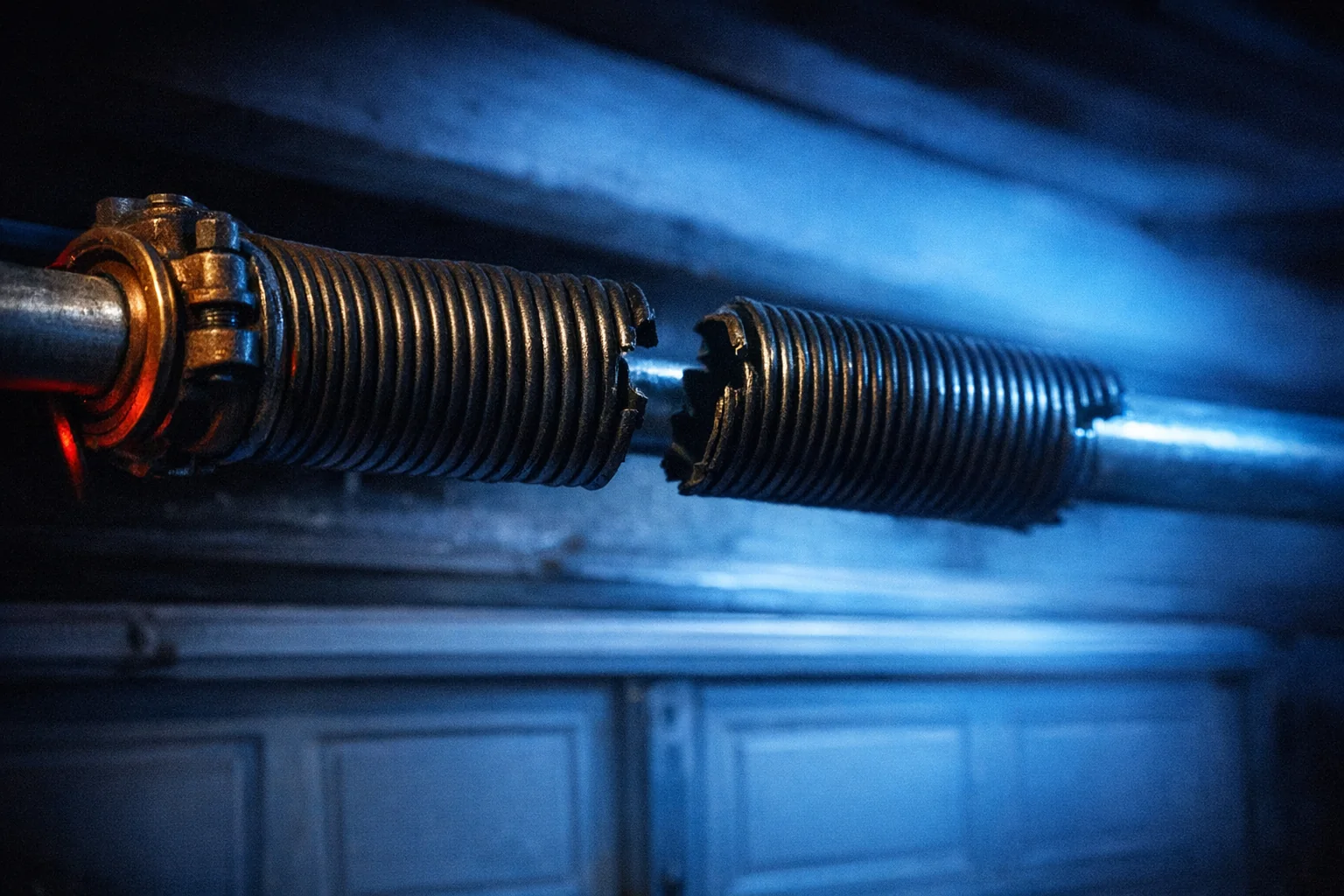
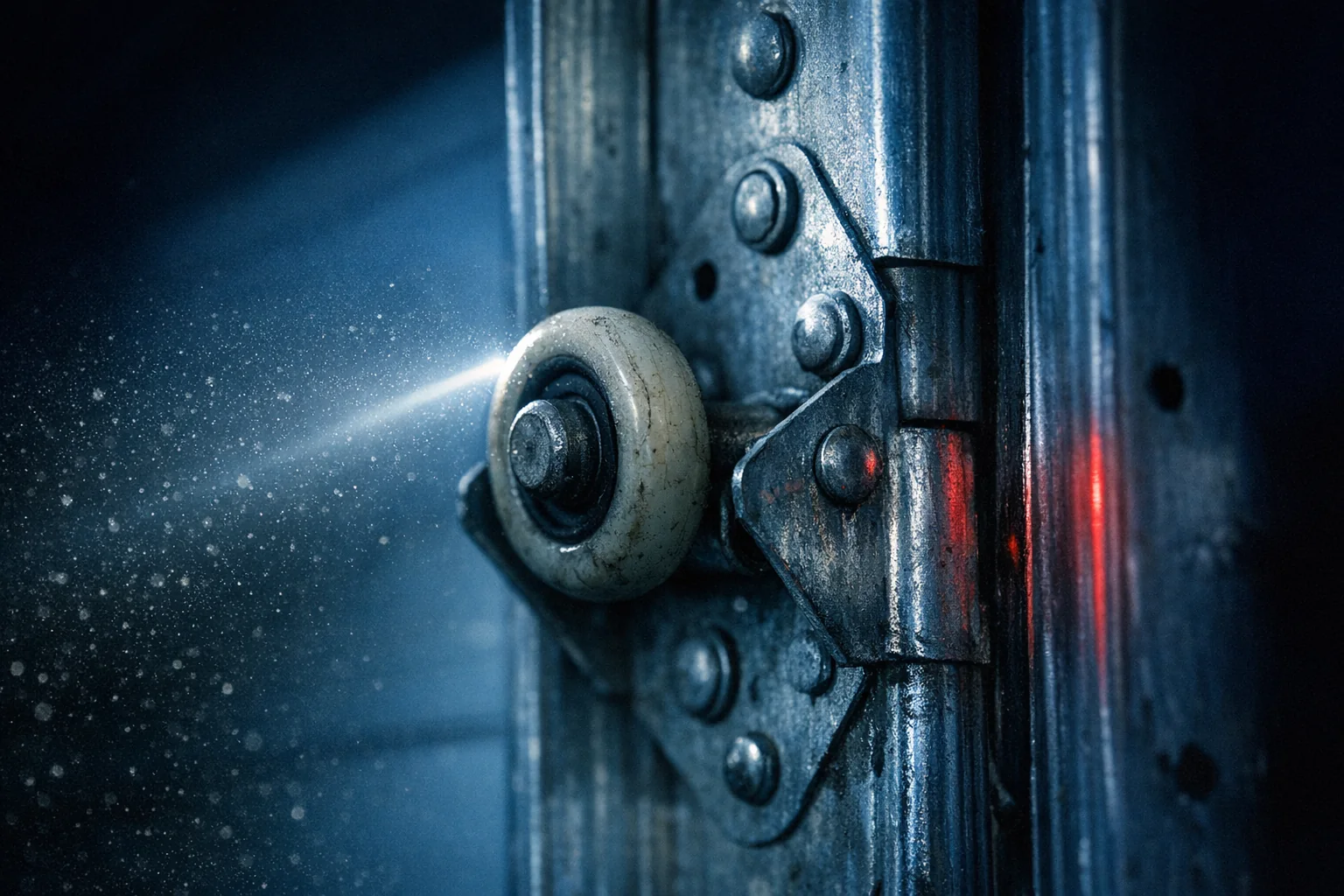
Three causes cover almost every case. The first is a hit: a bumper meets the door on the way in, a panel is pushed out of square, and the rollers walk out of the track at the next cycle. The second is a cable failure: a cable snaps or jumps its drum, one side loses its lift, and the door racks sideways until the rollers on that side climb out. The third is a broken spring, which leaves the door impossibly heavy on one cycle and drags the whole system crooked as something gives.
The causes matter because the repair is not the same. A rolled-out-of-track door from a bump is a reset and a panel check. A cable or spring failure that put the door off track needs the failed part replaced, or the door returns to its track and leaves it again, heavier the second time.
What not to do
- Do not run the opener. A motor driving a door that has left its track bends panels, tears the cables further and turns a reset into a replacement.
- Do not force the door by hand in either direction. You are stronger than a cable, which is exactly the problem: a cable that gives under hand force drops that side of the door.
- Do not pry or hammer the track straight. The track is made to be aligned, not reshaped, and a hammered track guarantees the door runs crooked even after it is back in.
- Do not keep using the opening. A half off door across a driveway is a hazard for cars and children, not a lane that works if you go slowly.
- Do not lean anything against the door or stack something under it to hold it. Props shift, and a shifting prop is how the reset becomes an injury.
What to do first
Stop and make the door safe first: close nothing, force nothing. Unplug the opener or cut its breaker so nobody runs it by remote. Keep the household and the cars out of the opening. Then call, and say the words that matter: the door is off its track and the cable, if you can see it, is loose or tight. We ask that on the phone because it changes what we bring.
If the door is stuck partway open, the car in the garage stays in the garage for the length of the repair. That is a real cost and we plan around it, but it is not worth trading against a door panel dropping on the hood.
One question comes up on these calls: the car is inside and the door is stuck partway, so can it be closed for the night? Sometimes, on some doors, moved by hand exactly as we describe over the phone and nothing forced. What we will never talk anyone through is winding, prying or cable work by phone, because those are the moves that turn a one visit job into an injury.
How the repair goes
The door is first secured where it hangs, so nothing moves while it is being worked on. Then the failure is read: which rollers left the track, whether a cable jumped or frayed, whether the spring system still matches the door. Cables are re-seated and wound evenly on their drums, the door is lifted back into the tracks by hand, and the panels are checked for damage from the event.
From there the reset is finished properly: the track is aligned and fastened, the springs are checked against the door's balance, the opener's force and travel limits are reset, and the door is run through full cycles by hand and by motor. The last step is the one that separates a reset from a repeat visit, because a door that leaves its track once and is put back without finding the cause will find its way out again.
When to call us
Off track calls are same day work: the door is secured, the cause is fixed, the track is trued and the system is cycled and balanced before we leave. All work is performed at your home or business across Bergen, Essex, Hudson, Middlesex, Morris, Passaic, Somerset and Union counties.
Frequently asked questions
Question 1: Can I put a garage door back on its track myself?
We ask that you do not. The door is under spring tension and held by cables, and a slipped cable drops that side. A reset is quick work for a technician with the door secured, and a dangerous one without.
Question 2: Why did my garage door come off its track?
Almost always one of three causes: the door was struck by a vehicle or object, a lift cable jumped its drum or frayed, or a spring failed and the imbalance dragged the door crooked until the rollers climbed out.
Question 3: Is it safe to open the door partway to get the car out?
No. A door that has left its track can drop the side you are driving under. The cost of leaving the car inside for a few hours is the price of not betting on a cable.
Question 4: How long does an off track repair take?
A straightforward reset with an undamaged cable and track is usually finished in a single visit. If a cable, spring or panel was damaged in the event, the visit includes that replacement and runs longer.
Question 5: My door is off track and the spring is broken. Which is fixed first?
The door is secured first so nothing falls, then the spring is replaced, then the door is reset into the tracks. Fixing the track without the spring sends the door out again on the next cycle.
Question 6: Can a bent track be repaired or does it need replacing?
A track that has been knocked out of alignment is trued and refastened. A track that has been hammered, pried or kinked is replaced, because a deformed rail will wear out rollers and walk a door off track again.