Garage doors are the loudest part of a house that is used every day, and they are also one of the few machines that announce their problems in plain audio. The sounds are not random. Each one maps to a part and a stage of wear, and learning the map turns a mystery noise into a short list of suspects.
Grinding and scraping on the way up
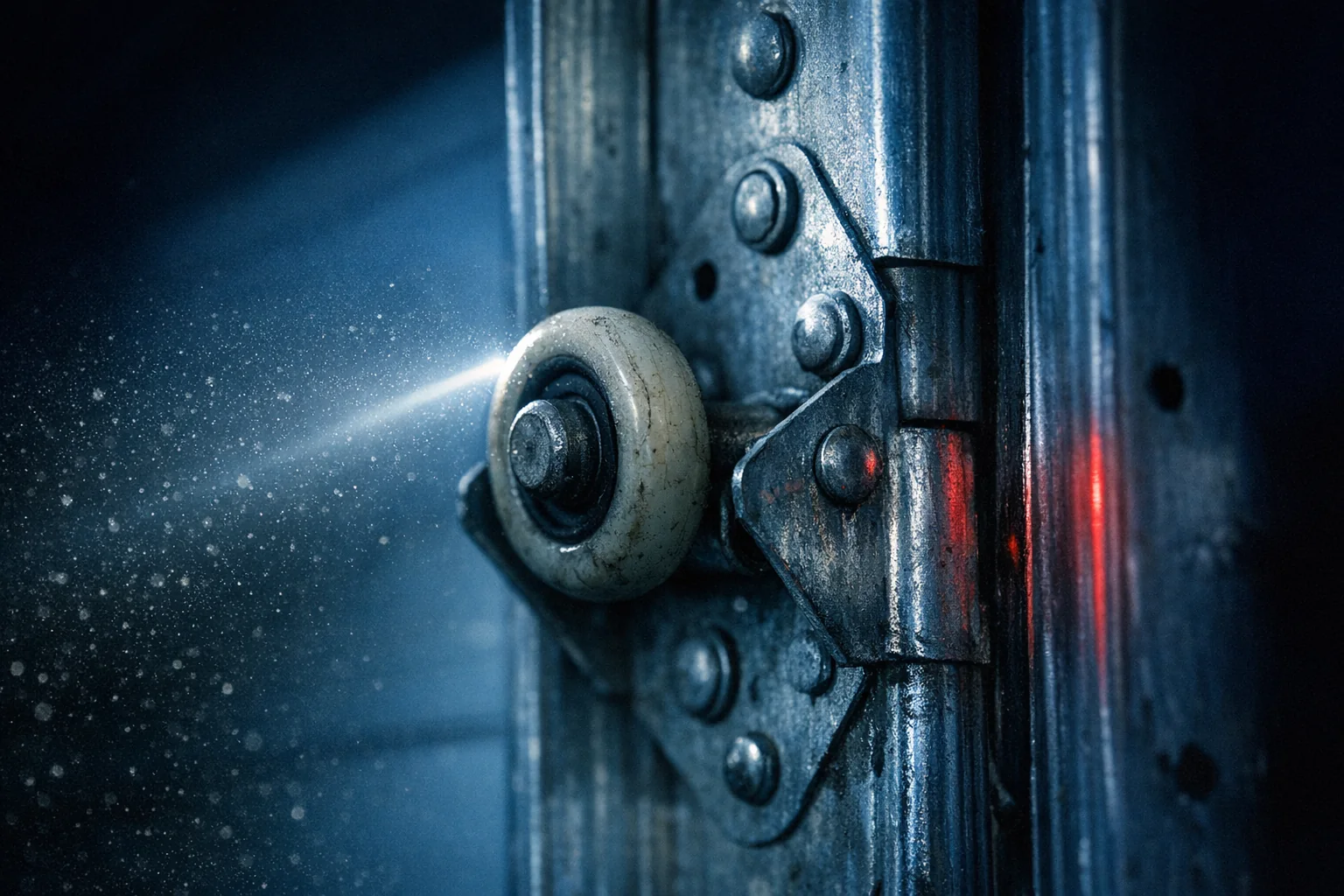
A grinding or scraping sound that runs through the whole travel is the classic worn roller complaint. Rollers have bearings or nylon wheels that ride inside the track, and when the wheel cracks, flatspots or siezes, the roller stops rolling and starts dragging. Metal scraping against metal is what you hear, and every cycle removes a little material from the roller and the track.
Left alone, a dragging roller chews the track's inner edge and the problem graduates from roller replacement to roller and track work. The repair is cheap today and moderate next year, which is the shape of most garage door decisions.
Noise also travels, which is why the same door sounds worse from inside the house than from the driveway. The panel passes vibration into the track, the track passes it into the jamb, and the jamb passes it into the wall. Quieter rollers fix the sound twice over: the rolling itself is quieter, and less vibration reaches the structure in the first place. That is why roller replacement is the most effective noise repair on most doors, and among the quickest.
Squeaking and chirping
A rhythmic squeak that repeats along the travel is dry metal, not broken metal. Roller bearings, hinges and the opener rail all need a light oil or silicone product, and a door that has gone a few years without any will sing. This is the one noise a homeowner should fix: a few minutes of lubrication on the hinges and roller bearings, none of it on the tracks or the torsion springs, quiets most squeaks for a season.
If the squeak comes back within weeks of oiling, or the sound deepens toward grinding, the bearing inside the roller is failing rather than merely dry, and lubricant is postponing the repair instead of making it.
Popping, and a bang on opening
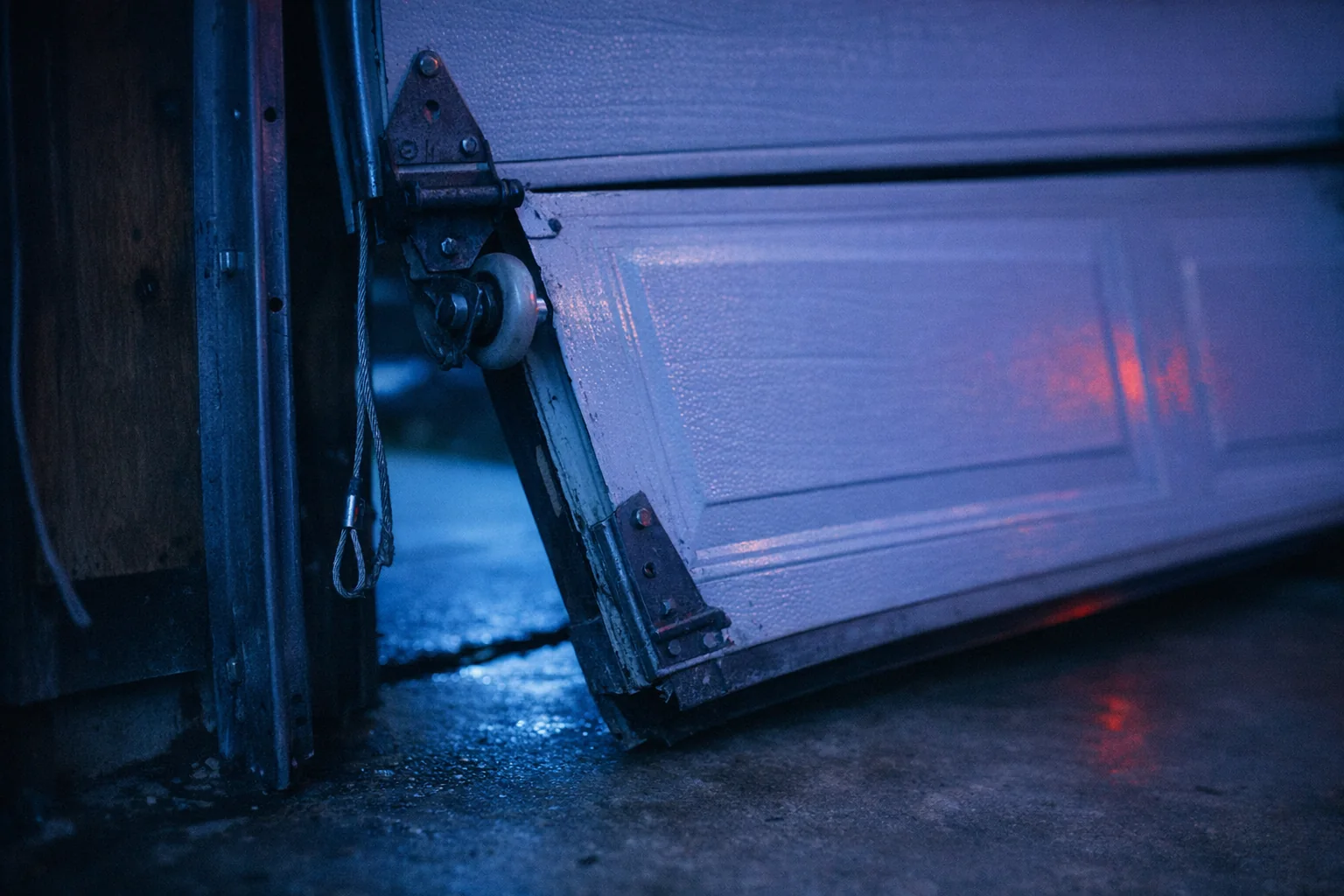
A pop or crack from the top of the door at the moment the opener starts is worth taking seriously, because the parts that live up there are the parts under the most stored energy. A torsion spring can make noise as its coils bind and release unevenly late in its life, a cable that has begun to slip on its drum makes a distinct jump sound, and a loose spring fitting can knock against the shaft.
None of those is a lubrication problem and none of them is a homeowner repair. If the sound is a bang rather than a click, if the door has begun to move unevenly, or if a cable looks loose on one side, stop using the door and call. A door with a failed cable drops, and the safest version of that failure is the one that never happens.
Rattling and vibration
A loose rattle that comes and goes is usually hardware. Door hardware works loose over years of vibration, and the fix is as boring as it sounds: snug the hinge and bracket screws with the door closed. While you are there, look at the opener's rail and chain or belt; a chain that slaps is a tension adjustment, and a rail that knocks against the ceiling is a loose mount.
One caution belongs here. The brackets at the bottom corners of the door and anything attached to the spring system are under load. Snug what is clearly a hinge screw; leave brackets alone if they involve cables, drums or the spring shaft.
A thud at the bottom of travel
A door that lands hard, or bounces at the floor, is usually two settings apart from quiet. The opener's down force and travel limits decide how hard the door is driven into the floor, and both drift with weather and time. A door that is also heavy by hand points at balance rather than settings, and balance is a spring question. Testing which of the two it is takes a door closed and released by hand, which is a two minute job we do on every service visit.
When to call us
Roller and cable work is quiet work: new rollers with sealed bearings, cables replaced in pairs where the wear calls for it, tracks cleaned and aligned, and the opener's force and limits set so the door lands softly. All work is performed at your home or business across Bergen, Essex, Hudson, Middlesex, Morris, Passaic, Somerset and Union counties.
Frequently asked questions
Question 1: Why is my garage door suddenly so loud?
The common causes, in order of how often we find them, are worn or dry rollers, loose hinge hardware, a chain or belt that needs attention, and a door that has drifted out of balance so the opener strains against it.
Question 2: Can I lubricate my garage door to stop the noise?
Yes for squeaks: a light oil or silicone product on roller bearings, hinges and the opener rail. Keep it off the tracks and the torsion springs. If the noise is grinding rather than squeaking, the roller is worn and oil only softens the sound for a while.
Question 3: Should I replace steel rollers with nylon?
For most homes, nylon rollers over sealed bearings are the quieter and smoother choice, and they need less attention. For very heavy or high cycle doors, the right roller is a matching decision, which is part of the visit.
Question 4: My door popped and now the cable looks different. What should I do?
Stop using the door and keep people clear of it. A cable that has slipped or frayed can let go, and a door with one dead cable drops on that side. This is a call, not a repair to attempt.
Question 5: Why does my garage door bang when it closes?
Most often the opener's down force and travel limits have drifted, and the door is being driven into the floor. If the door also feels heavy by hand, the balance is off and the springs are part of the question.
Question 6: How often should rollers be replaced?
It depends on the roller type and the cycles the door sees, not on the calendar alone. Cracked wheels, flat spots and visible play are the signs, and they are checked on every safety inspection.