The bang is the part people remember. A torsion spring under full tension stores enough energy to lift a two car door several hundred times, and when it lets go it releases all of it at once. Most homeowners describe the same sound, a single crack from the direction of the garage, loud enough that they went looking for something that had fallen.
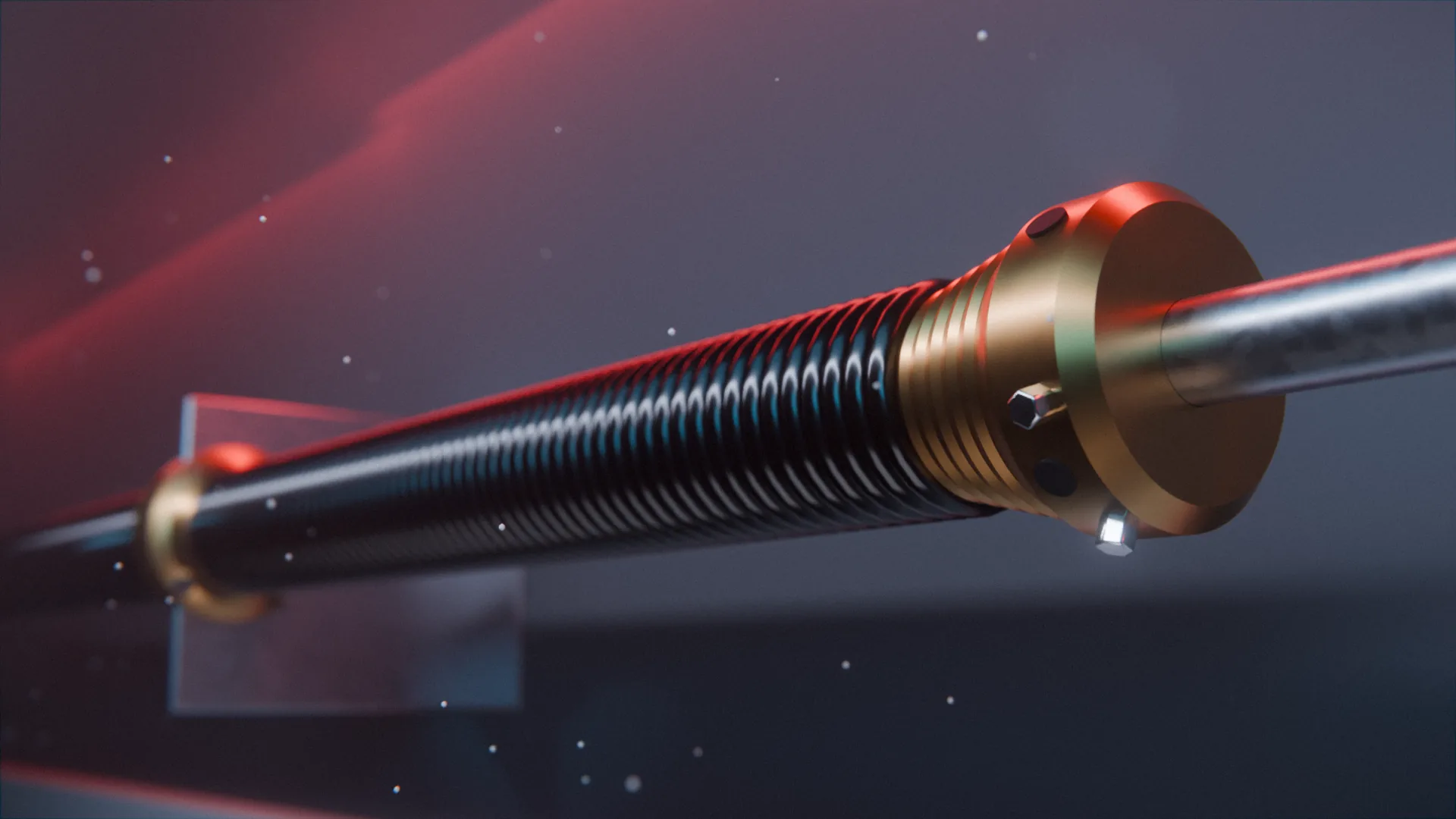
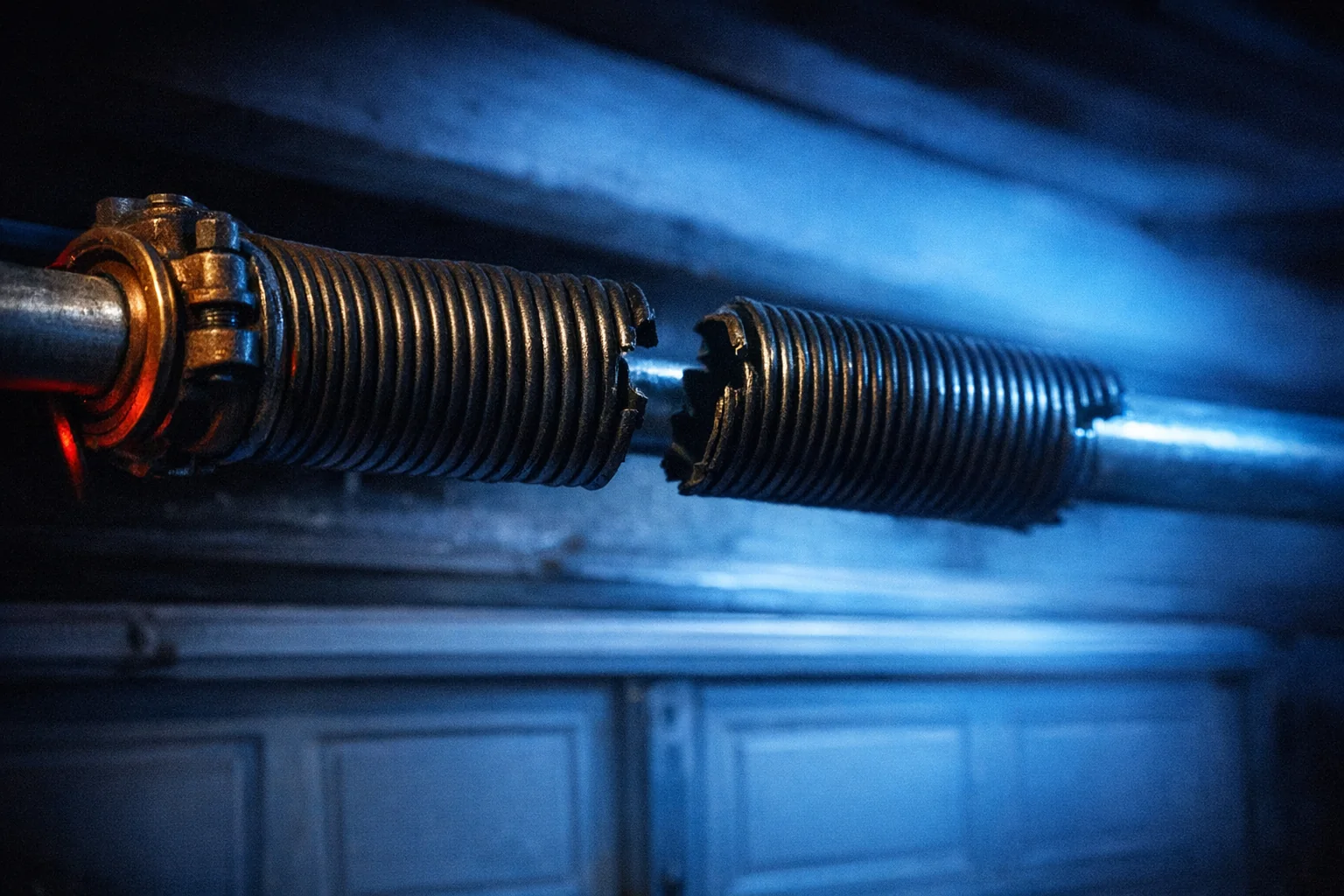
What they find is quieter: a door that will not open; an opener that hums and gives up; and a two inch gap in the coil of the spring mounted on the shaft above the door. That gap is the spring. Everything after the bang is about not making the situation worse.
What a broken spring looks and sounds like
- A loud crack or bang from the garage, sometimes described as a gunshot or a car backfiring.
- A visible separation in the coil of the spring on the shaft above the door, often two inches of clean gap.
- The opener runs and the door moves a few inches, then stops or drops back down.
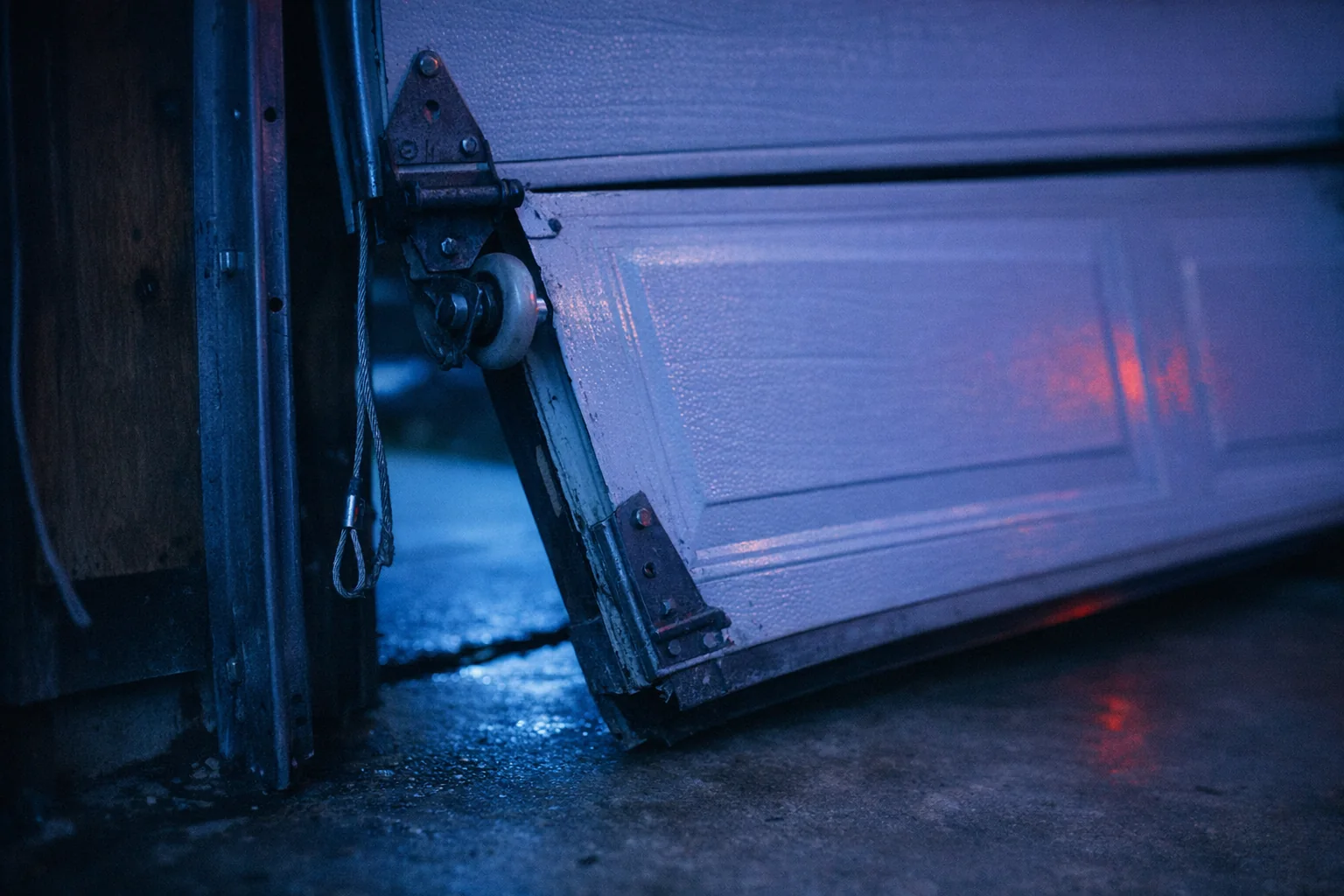
- A lift cable hanging slack on one side, because the drum it feeds has nothing pulling it.
- A door that closes faster than it should and lands harder, in the days before the spring finally broke.
Any one of those on its own can have another cause. The gap in the coil is the one that needs no diagnosis. If you can see it, do not run the door again.
What to do in the first minutes
- Stop pressing the button. Every cycle the opener attempts with a broken spring drags the door on one side and can throw a cable off its drum.
- Switch the opener off at the wall button or pull the disconnect, so nobody in the house closes it by habit.
- Keep everyone out of the doorway. A door with one dead spring is unstable, and it is heavier than it has ever been.
- Look, do not touch. Confirm the gap in the spring and photograph it. The photo is useful when you call.
- If a car is trapped inside, leave it there. The door can often be raised safely by a technician with the broken side supported, and not by pulling from the outside.
- Call and describe what you saw. Springs, cables and winding bars travel on the truck, so a spring replacement is usually a same visit job.
The order matters because the most common damage in a spring failure is not the spring. It is the opener being asked to lift a door that now weighs several hundred pounds, or a family member pulling the emergency release with the door up. Both turn a straightforward visit into a bigger one.
What never to do with a broken spring
Do not operate the opener repeatedly hoping it will catch. It will not, and every attempt heats the motor against a load it cannot move.
Do not loosen or unwind anything on the shaft, and do not put a screwdriver into the spring cone. Winding bars are square stock cut to fit the cone for a reason; a screwdriver under that torque bends, slips or snaps, and the spring's stored energy does not care where you were standing. This is the one repair on a house where the safe advice is to leave the hardware alone entirely.
Do not lift the door by hand to park the car. Without spring counterbalance you are lifting the full dead weight, and if it gets away from you the bottom section and anything under it take the hit.
How a spring replacement visit runs
The technician arrives, secures the door in the opening with locking pliers or clamps so it cannot move, and unwinds what is left of the broken spring with calibrated winding bars. The surviving spring comes off the shaft with it.
New springs are matched to the measured weight of the door, not to the size of the old ones, and both sides of the job get asked: the weight, and the cycle rating the household needs. The pair goes on, is wound to the correct turns, and the door is lifted by hand to mid travel to check the balance. A balanced door stays where you leave it. Then the opener is reconnected and the door is cycled, the cables are checked on their drums, and the auto reverse is tested before the work is called done.
A standard two car spring replacement usually runs one to two hours on site. Cables and rollers travel on the truck, so the frayed cable that a broken spring often takes with it is handled in the same visit rather than booked as a second one.
What decides the price of a spring job
No price is published on this site, and a real one cannot be guessed from a photo alone. The door's weight and size set the spring spec, the spring system sets the method, and the cycle rating sets how long the new pair should last. A single car door and a heavy insulated two car door are different springs on the same shelf.
What moves the figure beyond the springs themselves is collateral: whether a cable needs replacing, whether the door can be brought back to the opening without a section repair, and whether the opener has been damaged by running against a door it could not lift. All of it is in the written estimate before any work begins, and none of it changes at the house.
When to call us
Call when the spring has broken, or when the door has started closing harder and faster than it used to, which is the sound of a spring losing tension weeks before it fails. Send a photograph of the spring or the gap and we will confirm what you are looking at before the visit. All work is performed at your home or business across Bergen, Essex, Hudson, Middlesex, Morris, Passaic, Somerset and Union counties, and the estimate is written before any work starts.
Frequently asked questions
Question 1: Can I open my garage door with a broken spring?
Do not. The springs carry the weight of the door, and with one broken the full weight sits on the opener, the remaining spring and the cables. Pulling the emergency release under those conditions can drop the door.
Question 2: How do I know if a torsion spring is broken?
Look for a two inch gap in the coil on the shaft above the door, a door that lifts a few inches and drops, and a slack cable on one side. The gap needs no diagnosis.
Question 3: Can I replace a garage door spring myself?
It is the one job on a house we recommend against doing by hand. A torsion spring under winding bar torque stores enough energy to break bone, and screwdrivers do not belong in the cone. Leave the shaft alone.
Question 4: Why replace both springs when only one broke?
They wear at the same rate, so the surviving one is near the end of its life and the door stays unbalanced with it. Both go in together, matched to the measured weight of the door.
Question 5: How long does a spring replacement take?
Usually one to two hours on site for a standard two car door, including unwinding the old pair, fitting and winding the new springs, rebalancing the door and testing the auto reverse.
Question 6: How long do new springs last?
They are rated in cycles, one open and one close. A standard rating covers roughly ten thousand cycles of ordinary family use, and higher cycle ratings are available for busier doors. The rating is chosen with you before the job.